The Evolution of Intent-Centric Architectures in DeFi: From Transactions to Declarations
 Lidia Moss
5 min read
Lidia Moss
5 min read
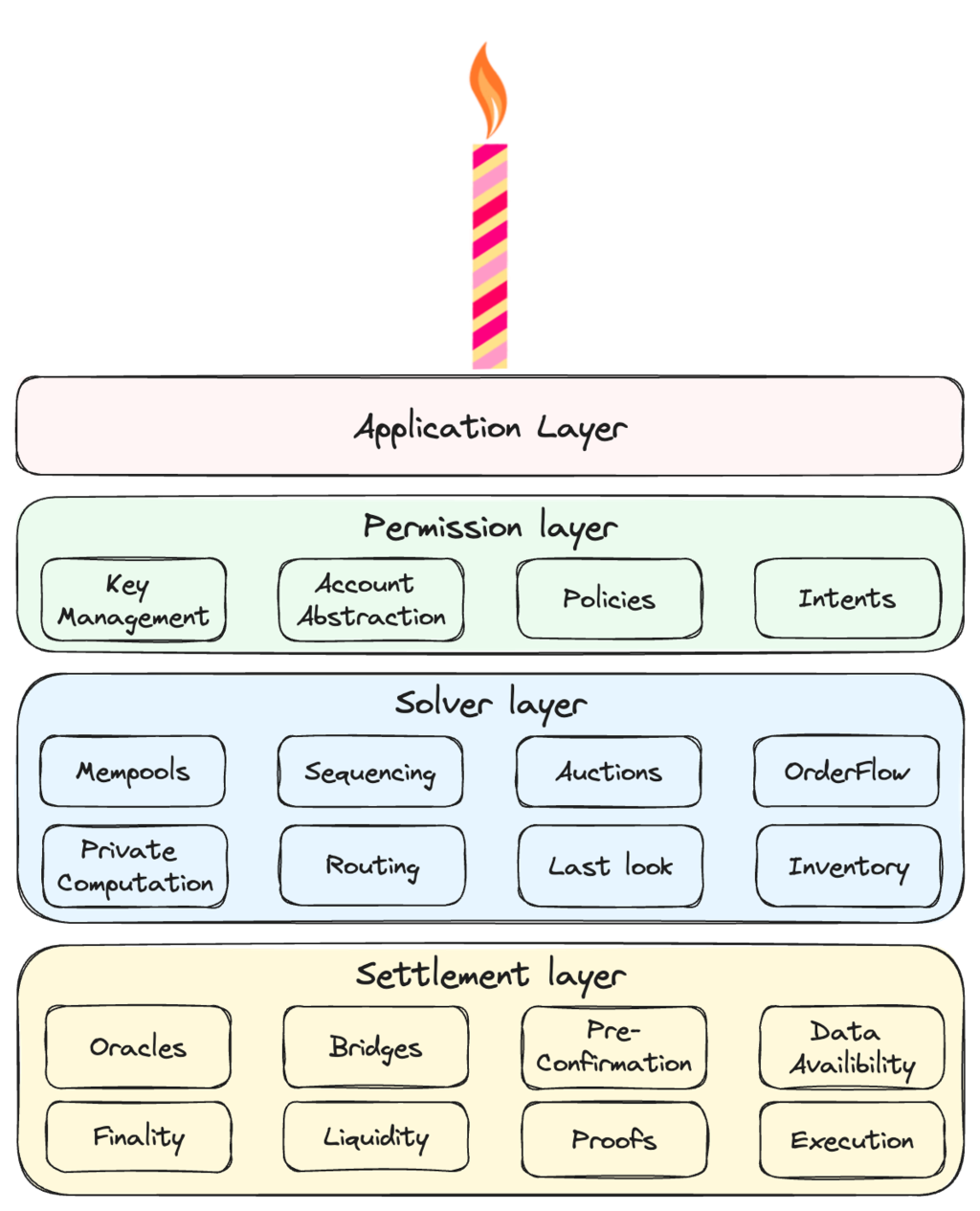
Let’s be honest. Using DeFi can feel like a part-time job. You want to swap some tokens? You need to check prices on three different DEXs, calculate slippage, approve the token spend, and then finally execute the trade. It’s a series of manual, low-level steps. What if you could just… state your goal? Like telling a driver, “Get me to the airport,” instead of dictating every turn.
Well, that’s the promise of intent-centric architectures. It’s a fundamental shift—from telling the blockchain how to do something, to simply declaring what you want done. And its evolution is quietly reshaping how we interact with decentralized finance.
The Transaction Era: The “How” Was Everything
In the beginning, there was the transaction. A user signs a meticulously crafted message specifying every single parameter: the exact function to call, the exact amount, the exact recipient. It’s like handing a chef a recipe with milligram precision. One wrong step, one mis-priced slippage tolerance, and the whole thing fails (often costing you gas for the privilege).
This model put all the cognitive load and execution risk on the user. You had to be the strategist, the tactician, and the risk officer. For complex DeFi strategies—say, leveraging a yield farming position across multiple protocols—the process was not just cumbersome, it was borderline inaccessible.
The Pain Points That Sparked Change
A few key frustrations really pushed developers to look for a better way:
- User Experience Friction: The multi-step dance of approvals, swaps, and deposits was a major barrier to mainstream adoption.
- Fragmented Liquidity: Best execution was scattered across dozens of venues, but accessing it was a manual, time-consuming hunt.
- MEV (Maximal Extractable Value) Exploitation: In the transparent mempool, your precise transaction was a beacon for bots to front-run or sandwich, stealing your value.
Something had to give. The ecosystem needed a layer of abstraction.
The Rise of the “What”: Intent as a Declaration
Enter the intent-centric paradigm. Instead of a step-by-step instruction manual, a user signs a declarative statement—an “intent.” For example: “I want to swap 1 ETH for at least 3,200 USDC, and I’m willing to pay up to 0.5% in fees.” That’s it. The “how” is no longer your problem.
This simple shift unlocks a world of new possibilities. It outsources the complexity to a new class of network participants—solvers, fillers, or agents. These entities compete to fulfill your intent in the most efficient way possible. They’re the chefs who take your order for “a delicious pasta dish” and handle sourcing the ingredients, choosing the recipe, and cooking it.
Key Architectural Shifts This Enabled
| Old Model (Transaction-Centric) | New Model (Intent-Centric) |
| User specifies exact path | User specifies desired outcome |
| Execution risk is on user | Execution risk is on solver network |
| MEV is easily extractable | MEV can be captured and returned to user |
| Single-chain, single-protocol focus | Naturally cross-chain & cross-protocol |
This evolution didn’t happen overnight. It started with simple aggregators for swaps, which were a kind of primitive intent. But the real architecture is becoming far more sophisticated.
The Engine Room: Solvers, Auctions, and New Economic Games
So, if the user just declares an intent, who figures it out? This is where the magic—and the complex new economics—come in. A decentralized network of “solvers” listens for these intents. Their job is to find the optimal fulfillment path.
Think of it like a silent auction. You broadcast your intent. Solvers scramble, simulating routes across DEXs, bridges, and lending markets. They bid for the right to fulfill your order. The winner isn’t necessarily the one who charges the lowest fee, but the one who delivers the best net outcome for you—after their fee. This competition, honestly, is what drives efficiency.
This solver market also changes the MEV game. In the old world, searchers extracted value from users. In an intent-centric world with a competitive solver market, that extracted value—the efficiency gains from better routing—can be partly returned to the user as a better price. The economic alignment starts to flip.
Where We See It Today: Real-World Applications
You might already be using early forms of this without realizing it. Here’s where intent-centric design is taking root:
- Advanced Swap Aggregators: Platforms that don’t just compare DEXs but can split your trade across them, use bridges, and even incorporate private liquidity to get you the best price.
- “Smart” Wallets & Account Abstraction: Session keys that let you approve a set of actions (an intent) for a game or dApp without signing every single tx. That’s an intent.
- Cross-Chain Operations: Stating, “I want to provide liquidity on Arbitrum using my ETH on Mainnet,” and having the system handle the bridge, swap, and deposit in one seamless, secured bundle.
The Road Ahead: Challenges and a More Fluid Future
It’s not all smooth sailing, of course. This new architecture introduces its own set of challenges. We’re essentially creating a new layer of intermediaries—the solvers. Ensuring this network remains decentralized, permissionless, and resistant to collusion is a huge technical and cryptoeconomic puzzle. There’s also the “solver risk” question: you have to trust their fulfillment is correct, which requires robust verification systems.
But the trajectory is clear. The evolution of intent-centric architectures points toward a DeFi that feels… effortless. The future is declarative. You’ll state financial goals like, “Hedge my portfolio against a market downturn,” or “Generate yield on this idle asset with a moderate risk profile.” The network of agents and solvers will compose the lego bricks of DeFi protocols behind the scenes to make it happen.
We’re moving from being blockchain mechanics to being blockchain conductors. We specify the melody—the intent—and let a skilled orchestra of decentralized executors play the notes. The complexity fades into the infrastructure. And what’s left is simply the power to declare what you want your assets to do. That’s a future where DeFi finally starts to fulfill its promise of open, yet invisible, finance.